Healthcare Data Platform Powered by AI
How Techneeqs built a unified, AI-driven hospital operations platform that automated patient workflows, resource planning,
View Case Study →
We deliver tailored technology solutions
that align with your business goals and user needs.
Already chosen by the leaders








Our customer-first approach ensures measurable outcomes, scalability, and long-term success.









How Techneeqs built a unified, AI-driven hospital operations platform that automated patient workflows, resource planning,
View Case Study →
A mid-sized enterprise operating across multiple business units struggled with fragmented data sources,
View Case Study →
The project involved designing and developing a centralized application platform
View Case Study →
A global localization provider required a scalable, automated platform to translate enterprise websites
View Case Study →
A security technology provider required a unified platform to monitor, control, and manage
View Case Study →
A multi-specialty cardiac care network required an intelligent clinical software platform
View Case Study →
A metropolitan transit authority sought to modernize commuter navigation by providing real-time
View Case Study →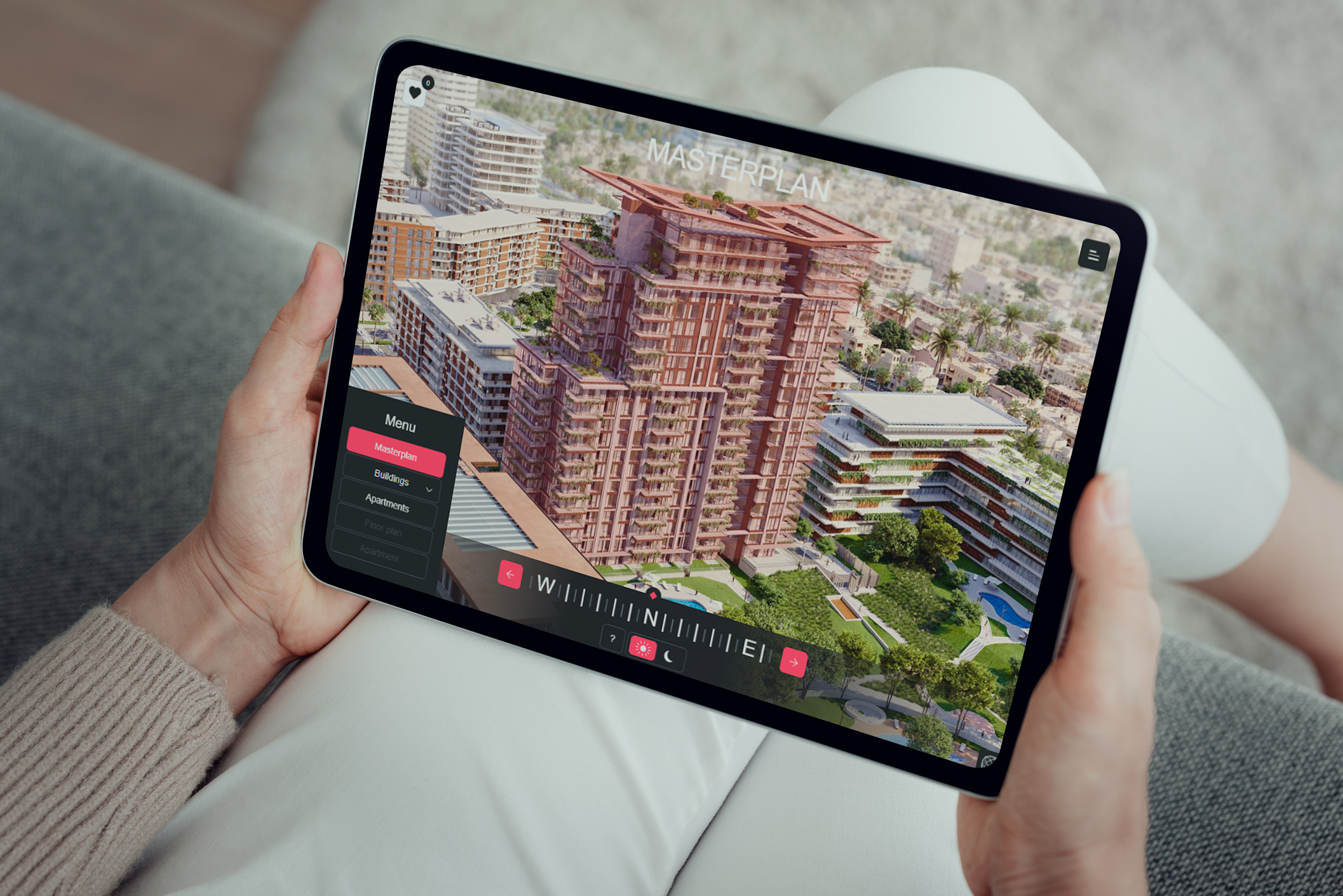
The client required an interactive digital platform that allows users to explore buildings remotely
View Case Study →
A digital platform was developed to streamline electric vehicle charging operations for a growing cleanmobility ecosystem.
View Case Study →
The client required a secure, enterprise-grade Financial Risk Management platform capable of analyzing
View Case Study →
A mid-sized U.S.-based logistics provider managing a multi-state fleet faced operational inefficiencies
View Case Study →
A travel technology company aimed to launch a unified digital platform that enables users to search
View Case Study →
A multinational enterprise required a centralized Global Payroll Management Software capable of handling
View Case Study →
A Florida based EdTech startup sought to build a scalable online education platform to deliver live classes
View Case Study →
A leading international parking management provider sought a robust, self-service payment kiosk system
View Case Study →
A digital media licensing company required an AI solution to detect unauthorized image usage and track copyright infringements online.
View Case Study →
A hospitality group operating across Asia, Europe, and the Middle East required a unified digital platform for hotel booking via web and mobile.
View Case Study →
A unified platform connecting EV drivers, fleet operators, and charge station owners through a single intelligent application for seamless charging operations.
View Case Study →An emerging mobility technology provider needed a unified system connecting EV drivers, fleet operators, and charge station owners through a single intelligent application. The goal was to eliminate range anxiety, improve charger utilization, automate payments, and provide real-time infrastructure visibility. The solution had to support rapid scalability, IoT device integration, and multi-platform access while maintaining enterprise-grade security and performance.
The architecture was designed using a modular, API-driven approach to support interoperability across hardware vendors and software ecosystems. The platform centralized charging station discovery, reservations, payment processing, and usage analytics through the following key modules:
Real-time availability, distance calculation, connector compatibility, and route optimization to help drivers find the nearest suitable charger instantly.
Reservation scheduling with dynamic time allocation and waitlist logic to maximize charger utilization and reduce driver wait times.
Live charger status monitoring, session tracking, remote start/stop controls, and diagnostics via OCPP-compatible communication protocols.
Secure digital payments, integrated wallet system, subscription plans, and automated invoicing for drivers and fleet operators.
Utilization reports, revenue tracking, device health monitoring, and predictive maintenance alerts for station owners and operators.
Batch charging scheduling, usage optimization, and cost reporting tools enabling fleet operators to manage energy consumption efficiently.
Charging stations from different manufacturers produced inconsistent telemetry formats; a protocol normalization layer was essential for compatibility.
Real-time charger availability demanded edge caching and WebSocket streaming instead of repeated polling to meet user expectations.
Peak demand during commuting hours required load balancing and auto-scaling rules to be configured from the very first deployment.
Early testing showed users prioritized speed and simplicity; UI workflows were redesigned to complete the entire booking in under three taps.
IoT device authentication and encrypted communication had to be embedded at the architecture stage rather than added as an afterthought.
Following deployment, the platform significantly enhanced charging network efficiency, reducing station idle time and improving utilization rates across locations. Users experienced faster session access and reliable availability data, leading to strong adoption growth and higher engagement. Fleet operators benefited from optimized charging schedules and cost visibility, while station owners gained actionable analytics for maintenance and revenue optimization. The client successfully launched a scalable digital infrastructure capable of supporting expansion into new regions, onboarding additional hardware partners, and handling increasing transaction volumes without performance degradation.
A hospitality group operating across Asia, Europe, and the Middle East required a unified digital platform enabling users to search, compare, and book hotel rooms across properties via web and mobile applications. The system needed to support real-time inventory synchronization, multi-currency pricing, regional tax compliance, and multiple checkout methods. Beyond booking, the client wanted integrated e-commerce capabilities for upselling services such as airport transfers, spa packages, dining reservations, and local experiences. The objective was to engineer a scalable, high-performance platform with global payment compatibility and enterprise-grade reliability.
The platform was architected using a composable commerce paradigm combined with a micro-frontend architecture, decoupling booking logic, payment orchestration, and inventory management into independently deployable services.
A federated API gateway unified data access across distributed microservices and third-party hotel property management systems for seamless integration.
Inventory queries were processed through edge compute nodes deployed across multiple regions, ensuring sub-second search results globally.
Currency conversion and tax calculations were dynamically computed using localized rule engines, supporting digital wallets, regional gateways, and card processing.
Mobile apps were built with a shared business logic layer for platform parity with native performance and offline-ready booking states for low-connectivity regions.
Supporting multiple global payment methods requires a middleware layer rather than direct gateway integrations to avoid tight coupling.
Latency dropped by over 60% when search and pricing logic moved closer to users via edge compute nodes.
Federated APIs can become inconsistent without strict contract validation — schema governance must be enforced from day one.
Polling-based models caused stale availability and booking conflicts. Real-time event streaming eliminated these issues entirely.
Tax and regulatory rules vary widely across regions and must be modularized from the start rather than retrofitted later.
The architecture positioned the client for rapid geographic expansion and partner onboarding. By leveraging composable infrastructure, performance-oriented technologies, and a modular checkout ecosystem, the platform evolved from a booking tool into a scalable global hospitality commerce engine.
A digital media licensing company required an AI-powered web application capable of detecting near-duplicate and modified image copies online, identifying cropped, resized, watermarked, or slightly edited versions, monitoring large-scale internet sources automatically, and generating legal evidence reports for copyright enforcement. The objective was to develop a high-performance image similarity detection platform that could operate at scale, provide high accuracy, and reduce manual verification effort by over 80%.
Instead of relying on traditional hashing or pixel comparison methods, a deep learning-based feature extraction pipeline was designed. The solution architecture included:
A pre-trained CNN extracted high-dimensional feature vectors (embeddings) capturing semantic and structural properties of images rather than raw pixel data.
Embeddings indexed in a high-speed vector database using cosine similarity and ANN search for millisecond-level retrieval across millions of images.
Automated crawlers scanned marketplaces, websites, and image-heavy platforms. Images were normalized into embeddings before indexing.
Combined similarity threshold and transformation detection to generate violation confidence percentages and flag high-probability copyright infringements.
Screenshot capture of detected URLs, timestamp logs, similarity heatmap overlays, and downloadable PDF compliance reports for legal enforcement.
Cropped, color-adjusted, or partially modified images were bypassing detection. Resolved with multi-layer feature extraction and data augmentation training.
Brute-force similarity search became expensive at scale. Resolved by implementing FAISS with IVF + HNSW indexing for optimized ANN retrieval.
Product catalogs sharing similar stock layouts caused false positives. Resolved with threshold tuning and structural similarity metrics (SSIM).
Many platforms had anti-bot detection. Resolved with rotating proxies, adaptive crawl frequency, and compliance monitoring.
Vector embeddings significantly outperform perceptual hashing in complex similarity cases involving modified or transformed images.
Similarity thresholds must be calibrated per industry — e.g., fashion vs. artwork require very different sensitivity settings.
ANN search infrastructure must be designed from the beginning — retrofitting at scale is costly and disruptive.
Involving human reviewers improved AI confidence calibration and reduced edge-case errors in borderline detections.
Post-deployment, the system processed millions of images weekly with sub-second similarity matching. The client successfully identified thousands of unauthorized uses within the first three months, recovering licensing revenue and strengthening intellectual property protection. The platform also became a strategic asset, allowing the organization to expand into automated digital rights management services.
A leading international parking management provider sought a robust, self-service payment kiosk system to streamline on-site transactions, reduce operational overhead, and enhance customer convenience across multiple locations. Their legacy payment infrastructure relied heavily on manual collection and outdated terminals, leading to long queues, reconciliation delays, and limited reporting visibility. The objective was to deploy a scalable, secure, and user-friendly kiosk platform capable of handling high transaction volumes while integrating seamlessly with their centralized parking management ecosystem.
We designed and implemented an end-to-end kiosk platform that unified hardware, software, and payment processing into a single intelligent system. The approach focused on three pillars:.
Designed an intuitive touchscreen interface with multi-language support, accessibility features, and minimal transaction steps to reduce average payment time.
Built APIs to connect kiosks directly with the provider’s central parking database, enabling instant ticket validation, dynamic pricing calculation, and live status monitoring.
Implemented encrypted payment processing, tokenization, and compliance with global payment standards to ensure safe transactions.
The kiosks were configured to support multiple payment modes including cards, contactless payments, QR codes, and digital wallets, ensuring adaptability across regions and customer preferences.
Early prototyping revealed that UI responsiveness and device drivers must be optimized together to avoid latency.
Parking facilities sometimes experience connectivity issues; implementing local transaction caching ensured uninterrupted service.
Supporting multiple currencies, tax rules, and payment standards required modular architecture and configurable logic.
Embedding monitoring tools minimized field maintenance visits by allowing remote troubleshooting and updates.
This unified solution transformed the client’s parking operations by eliminating manual bottlenecks, accelerating transaction speed, and ensuring accurate automated billing. The provider achieved measurable efficiency gains, reduced staffing costs, and strengthened customer trust through reliable and secure payments. Additionally, centralized monitoring enabled proactive maintenance and operational insights, empowering leadership with real-time performance visibility across all deployed locations.
A Florida based EdTech startup sought to build a scalable online education platform to deliver live classes, recorded sessions, assessments, and certification programs for students and professionals. The objective was to create a centralized digital learning ecosystem capable of handling thousands of concurrent users, real-time interactions, and multilingual content while maintaining high availability and strong data security. The platform needed to support instructors, learners, and administrators with distinct role-based dashboards and automation for course lifecycle management.
The development team designed modular, service-oriented architecture to ensure extensibility and performance. Instead of heavy front-end frameworks, a lightweight progressive enhancement approach was adopted using server-rendered pages combined with dynamic components.
Key implementation strategies included:
Early load testing revealed database bottlenecks that required indexing and query optimization.
Video encoding tasks must never block user workflows.
Simplified onboarding and clean navigation improved retention more than adding new features.
Modular services reduced refactoring when new features like certifications and live sessions were added.
Real-time logging and metrics allowed proactive issue resolution before users noticed problems.
Within six months of launch, the platform had grown to support tens of thousands of registered learners, while average session durations rose substantially, reflecting stronger user engagement. Instructor productivity saw a major boost as automation streamlined routine tasks, and infrastructure expenses dropped significantly thanks to optimized caching strategies and containerized scaling. Course completion rates also improved notably, driven by intelligent engagement analytics and timely reminder systems. Overall, the platform enabled the client to move from a traditional classroom-dependent model to a highly scalable digital learning business, opening doors to rapid international expansion and establishing a strong competitive position in the online education market.
A multinational enterprise required a centralized Global Payroll Management Software capable of handling payroll operations across multiple countries, currencies, tax structures, and compliance regulations. Their legacy system relied on fragmented regional tools, manual spreadsheets, and delayed reporting cycles, leading to inconsistencies, compliance risks, and excessive administrative overhead. The objective was to engineer a unified, real-time payroll platform that could automate calculations, ensure regulatory compliance, and provide transparent financial insights for HR and finance teams worldwide.
The solution was architected as a scalable, modular web application with real-time processing capabilities. A microservices-inspired backend handled payroll computation, compliance logic, currency conversions, and reporting services independently to ensure flexibility and resilience.
Key architectural strategies included:
These technologies were selected for performance, scalability, maintainability, and real-time synchronization capabilities. TypeScript enforced strict typing across layers, while Socket.io enabled instant updates for payroll processing and status notifications.
Payroll rules vary widely across jurisdictions; building configurable rule engines instead of hardcoded logic improved adaptability.
Payroll errors can have financial and legal consequences, making validation pipelines and testing frameworks essential.
Bulk payroll runs required query tuning and database indexing strategies to prevent latency.
HR teams preferred intuitive dashboards over feature-heavy interfaces; iterative UX testing improved usability
Live processing status reduced support queries and increased stakeholder confidence.
Post-deployment, the organization transitioned from decentralized payroll operations to a unified digital ecosystem. The system handled multi-country payroll cycles seamlessly, supported rapid scaling as the company expanded into new markets, and maintained consistent compliance standards. Operational costs dropped significantly due to automation, and payroll-related support tickets decreased sharply. The platform now functions as a mission-critical enterprise system, delivering reliability, transparency, and scalability while empowering HR and finance departments with real-time data insights and strategic decision-making capabilities.
A travel technology company aimed to launch a unified digital platform that enables users to search, compare, and book domestic and international flights seamlessly across web and native mobile applications. The goal was to create a high-performance, scalable booking ecosystem capable of handling real-time inventory, dynamic pricing, secure payments, and multi-vendor airline integrations while delivering a frictionless user experience.
The platform needed to support thousands of concurrent users, integrate with multiple airline APIs and global distribution systems (GDS), and provide advanced features such as fare alerts, instant refunds, and AI-based recommendations.
The solution was architected as a distributed, API-first platform with modular services handling flight search, booking, payments, notifications, and user management.
Key implementation strategies included:
Aggregated airline and aggregator APIs into a normalized response format for fast comparison.
Cached and refreshed fare data with intelligent polling to ensure realtime accuracy
Designed consistent interfaces across web and mobile using shared design systems.
Integrated multiple payment gateways with tokenized transactions and fraud detection.
Decoupled modules ensured scalability and independent deployment cycles.
Mobile apps supported partial offline states for itinerary viewing and ticket storage.
Airline APIs often respond inconsistently; implementing intelligent caching and fallback logic dramatically improved reliability.
High search traffic required optimized indexing and parallel API calls to maintain sub-second response times.
Built automated reconciliation services to handle failed bookings and refunds without manual intervention.
Native development provided better performance for complex search filtering and offline storage
Strict encryption, PCI-compliant payment handling, and rate-limiting were essential for protecting user data.
End users gained fast, reliable booking experience with accurate pricing and personalized recommendations. Travel agents benefited from an enterprise dashboard that streamlined bulk bookings and reporting. The client organization achieved reduced operational overhead through automation, centralized monitoring, and reduced dependency on manual booking workflows.
The platform delivered a dramatic improvement in booking efficiency, significantly accelerated processing times, and strengthened user retention shortly after launch. It maintained highly reliable availability even during peak travel periods while mobile usage rapidly surpassed web adoption within a short span. Transaction reliability improved markedly due to intelligent retry mechanisms and queue-driven workflows, minimizing failures and enhancing user trust. Overall, the solution proved to be a robust and scalable travel commerce ecosystem capable of sustaining rapid growth, supporting new airline integrations, and seamlessly expanding into additional services such as hotels and holiday packages.
A mid-sized U.S.-based logistics provider managing a multi-state fleet faced operational inefficiencies due to fragmented tracking systems, manual dispatch coordination, and limited real-time visibility into vehicle performance. Their legacy workflow relied heavily on phone communication, spreadsheets, and delayed reporting, which led to route inefficiencies, fuel overconsumption, and inconsistent delivery timelines. The client required a centralized, scalable mobile solution that could provide real-time fleet monitoring, automated reporting, driver performance insights, and seamless communication between dispatch teams and drivers.
The objective was to design and deploy a cross-platform mobile application enabling real-time fleet intelligence, predictive maintenance alerts, and data-driven logistics optimization while ensuring minimal latency and high reliability.
The architecture strategy focused on building a real-time, event-driven mobile system optimized for field conditions such as unstable connectivity and varying device performance. The solution included:
A modular component architecture was adopted so future modules (fuel analytics, AI route optimization, compliance tracking) could be integrated without re-engineering the core system.
TypeScript was intentionally selected to enforce strict typing, reduce runtime errors, and improve maintainability for long-term scaling.
Fleet drivers frequently operate in low-signal areas. Implementing local persistence with background synchronization prevented data loss.
Continuous GPS tracking drains devices quickly. Adaptive polling intervals significantly improved battery life.
Drivers require distraction-free interfaces. Simplified workflows improved adoption and reduced training time.
Streaming telemetry without throttling can overwhelm both devices and servers. Implementing buffering logic ensured stability.
TypeScript caught integration mismatches early, reducing production defects during expansion phases.
The mobile-first approach empowered drivers while giving management actionable analytics.
Within three months of deployment, the logistics provider transitioned from reactive fleet management to predictive operations. Dispatchers could proactively reroute vehicles during delays, maintenance teams received early alerts on vehicle anomalies, and executives gained access to real-time KPIs for strategic decision-making.
Operational costs declined, delivery reliability improved, and customer satisfaction scores increased due to accurate ETAs and transparent shipment tracking. The platform now serves as the company’s digital backbone for fleet operations and is positioned for future expansion into AI-driven logistics optimization.
The client required a secure, enterprise-grade Financial Risk Management platform capable of analyzing, monitoring, and mitigating operational, transactional, and compliance risks in real time.
The system needed to support two interfaces:
Key objectives included centralized data aggregation, predictive risk analysis, audit-ready reporting, high performance under large transaction loads, and strict adherence to financial-grade security and encryption standards.
A layered enterprise architecture was designed using a modular micro-component pattern to ensure scalability, maintainability, and secure service isolation. hardware vendors and software ecosystems. The platform centralized charging station discovery, reservations, payment processing, and usage analytics.
Architecture Strategy
Functional Modules
Because the platform handles financial and compliance data, a defense-in-depth security architecture was implemented:
Combining PostgreSQL for relational accuracy and MongoDB for analytics significantly enhanced query response times.
Defining permissions late causes architecture refactoring.
Database validation alone is insufficient; application-level verification is critical.
Embedding encryption and authentication into the architecture from day one avoided redesign costs.
Real-time logs and metrics drastically reduced debugging time in production.
Following deployment, the platform achieved measurable operational transformation:
The system now functions as a mission-critical decision intelligence platform, enabling proactive risk mitigation rather than reactive incident handling. Its modular architecture ensures future extensibility for AI-driven forecasting, regulatory integrations, and advanced financial analytics.
A digital platform was developed to streamline electric vehicle charging operations for a growing cleanmobility ecosystem. The client, an emerging mobility technology provider, needed a unified system that could connect EV drivers, fleet operators, and charge station owners through a single intelligent application. The goal was to eliminate range anxiety, improve charger utilization, automate payments, and provide real-time infrastructure visibility. The solution had to support rapid scalability, IoT device integration, and multi-platform access while maintaining enterprise-grade security and performance.
TThe architecture was designed using a modular, API-driven approach to support interoperability across hardware vendors and software ecosystems. The platform centralized charging station discovery, reservations, payment processing, and usage analytics.
Key functional modules implemented:
Real-time availability, distance calculation, connector compatibility, and route optimization.
Reservation scheduling with dynamic time allocation and waitlist logic.
Live charger status, session monitoring, remote start/stop, and diagnostics.
Secure digital payments, wallet system, subscription plans, and invoicing.
Utilization reports, revenue tracking, device health, and predictive maintenance alerts.
Batch charging scheduling, usage optimization, and cost reporting.
The platform was built with microservices architecture to allow independent scaling of critical components such as location services, payment processing, and IoT telemetry ingestion.
Charging stations from different manufacturers produced inconsistent telemetry formats; introducing a protocol normalization layer ensured compatibility.
Real-time charger availability demanded edge caching and WebSocket streaming instead of repeated polling.
Peak demand during commuting hours required load balancing and auto-scaling rules from initial deployment.
Early testing showed users prioritized speed and simplicity over advanced features; UI workflows were redesigned to complete booking in under three taps.
IoT device authentication and encrypted communication had to be embedded from architecture stage rather than added later.
The implemented platform unified EV drivers, fleet operators, and charging infrastructure providers within a single intelligent ecosystem built on a scalable, API-first architecture. By integrating real-time charger discovery, reservation management, secure digital payments, and IoT-enabled device monitoring, the solution established seamless coordination between users and charging stations. A microservices backend ensured independent scaling of critical services, while protocol-standardized hardware integration enabled compatibility across diverse charger manufacturers. The system’s intuitive interface and optimized workflows minimized user friction, allowing drivers to locate, book, and initiate charging sessions in seconds while operators gained centralized control, analytics, and automated operational insights.
Following deployment, the platform significantly enhanced charging network efficiency, reducing station idle time and improving utilization rates across locations. Users experienced faster session access and reliable availability data, leading to strong adoption growth and higher engagement. Fleet operators benefited from optimized charging schedules and cost visibility, while station owners gained actionable analytics for maintenance and revenue optimization. The client successfully launched a scalable digital infrastructure capable of supporting expansion into new regions, onboarding additional hardware partners, and handling increasing transaction volumes without performance degradation.
The client required an interactive digital platform that allows users to explore buildings remotely through immersive 3D visualization. The goal was to create a cross-platform solution enabling prospective buyers, tenants, and stakeholders to navigate properties virtually, inspect layouts, and access detailed information without physical visits. The system needed to function seamlessly on both web browsers and mobile devices while maintaining high-quality rendering performance and intuitive navigation.
The development strategy centered on creating a lightweight, high-performance AR navigation layer integrated with the transport authority’s live transit data APIs. The application detects the user’s surroundings through device sensors and camera input, then superimposes arrows, labels, and alerts on real-world objects such as signboards, platforms, and ticket counters.
We designed a unified architecture combining real-time 3D rendering with a scalable backend.
The approach focused on:
Large architectural models must be compressed and optimized to maintain real-time rendering.
Rendering performance varies widely across devices, requiring adaptive quality scaling.
Smooth navigation and responsiveness were more impactful than ultra-high polygon detail.
Automating model conversion reduced manual processing effort significantly.
The application demonstrated strong adoption and performance, with rapid user onboarding driven by its intuitive interface, a significant rise in inquiries from remote buyers, stable operation even under high concurrent usage, and consistently positive stakeholder feedback highlighting improved decision-making efficiency. Overall, the solution transformed traditional property viewing into an interactive digital experience, positioning the client as a technology-forward organization and providing a clear competitive advantage in their market.
A metropolitan transit authority sought to modernize commuter navigation by providing real-time, intuitive guidance within complex transport hubs such as bus terminals, metro stations, and interchanges. Traditional map-based apps failed to address user confusion in crowded environments, language barriers, and difficulty locating platforms or exits. The objective was to build a cross-platform Augmented Reality (AR) mobile application that overlays directional guidance, route details, and transit updates directly onto the user’s live camera view, enabling seamless navigation and reducing commuter stress.
The development strategy centered on creating a lightweight, high-performance AR navigation layer integrated with the transport authority’s live transit data APIs. The application detects the user’s surroundings through device sensors and camera input, then superimposes arrows, labels, and alerts on real-world objects such as signboards, platforms, and ticket counters.
Key architectural decisions included:
Accurate AR overlays required precise alignment between real-world coordinates and digital markers; extensive device testing was essential.
AR rendering can be resource-intensive, so frame-rate stabilization and memory management were prioritized.
Early prototypes with excessive overlays overwhelmed users; simplifying visual cues significantly improved usability.
Lighting conditions and crowded environments required adaptive rendering logic for consistent AR visibility.
Following launch, the application demonstrated measurable impact:
The AR transit assistant successfully transformed how passengers interact with public transportation infrastructure, establishing a scalable digital foundation for future smart-city mobility solutions.
A multi-specialty cardiac care network required an intelligent clinical software platform to unify patient data, support predictive diagnostics, and assist physicians in making faster, evidence-based treatment decisions. Their existing systems were fragmented across EMR exports, imaging archives, lab systems, and wearable device feeds, resulting in delayed diagnosis cycles, manual interpretation, and increased administrative overhead. The objective was to build a centralized cardiovascular intelligence platform integrating AI-driven risk prediction, automated reporting, and real-time clinical dashboards while maintaining strict healthcare compliance standards.
The system was architected as a modular clinical decision support platform with interoperable microservices and an AI analytics layer. A FHIR-compatible data ingestion engine consolidated patient data from hospital systems, imaging devices, and remote monitoring tools. Machine learning models analyzed ECG signals, echocardiography measurements, lipid profiles, and patient history to predict cardiac risk scores and detect anomalies.
Key functional modules included:
The UI was designed for rapid physician interaction, prioritizing visual signals, trend graphs, and decision prompts over dense clinical tables.
Within three months of deployment, the platform became the primary clinical interface for cardiologists across the provider network. Physicians reported improved diagnostic confidence, especially in borderline or high-risk cases. Hospital administrators observed measurable improvements in patient throughput and reduced ICU escalation rates. The predictive analytics module identified high-risk patients before symptom escalation, enabling preventive intervention protocols.
The solution ultimately transformed the client’s cardiology practice from reactive treatment to proactive cardiac care, positioning them as a technology-driven healthcare provider with measurable clinical performance improvements.
A security technology provider required a unified platform to monitor, control, and manage hundreds of wireless surveillance cameras across distributed locations. Their existing ecosystem relied on fragmented tools for device monitoring, firmware updates, and video access, resulting in operational inefficiencies, delayed incident response, and limited scalability. The objective was to develop a centralized web and mobile application enabling real-time camera management, remote configuration, live streaming, alert handling, and administrative analytics from a single interface.
We designed a cloud-centric architecture that integrates camera devices, backend services, and user interfaces into a synchronized system.
The solution emphasized:
The platform was built to support horizontal scaling, ensuring stable performance as device volume increased.
Different camera manufacturers implement standards differently; building a normalization layer early prevents integration debt.
Streaming performance depends more on network adaptation logic than raw server power
Early load testing identified bottlenecks in video relay services.
Operators favored simplified dashboards over feature-heavy interfaces.
Offline devices, unstable networks, and firmware failures required robust retry and recovery mechanisms.
Within a short period after deployment, monitoring efficiency rose substantially, manual maintenance visits declined considerably, and incident detection became noticeably faster. The infrastructure demonstrated strong scalability by supporting significant device growth without any performance degradation, while support requests related to camera downtime decreased markedly. Overall, the platform matured into a mission-critical operational asset that enabled the client to broaden their surveillance service offerings and confidently onboard enterprise customers.
A global localization provider required a scalable, automated platform to translate enterprise websites across multiple languages while maintaining brand tone, structural integrity, and SEO performance. Their existing workflow relied on fragmented tools, manual file exchanges, and inconsistent version control, which caused delays, increased costs, and quality gaps. The objective was to build a centralized translation platform capable of handling high-volume multilingual content, integrating with CMS systems, and supporting real-time collaboration between linguists, reviewers, and project managers.
We designed a cloud-based translation orchestration platform that unified content ingestion, translation, review, and publishing into a single workflow. The architecture included API-driven connectors for CMS platforms, automated content extraction, translation memory integration, terminology management, and real-time progress monitoring.
Key strategic decisions included:
This approach minimized manual handling and established a continuous localization pipeline.
Following deployment, the platform successfully processed thousands of web pages across 30+ languages within the first quarter. The client reported a significant increase in operational efficiency, improved linguistic accuracy, and higher customer satisfaction scores from their enterprise clients. The system’s scalable architecture allowed onboarding of new language pairs without infrastructure changes, positioning the provider to expand into additional global markets.
The project involved designing and developing a centralized application platform that enables organizations to create, manage, and distribute bundled software installers through a streamlined interface. The objective was to eliminate manual packaging processes, reduce deployment errors, and provide an automated system capable of handling complex software dependencies, versioning, and distribution workflows. The platform needed to support high scalability, secure storage of installer assets, real-time configuration, and rapid generation of custom installer packages tailored to different customer environments.
The solution was architected as a modular, cloud-native platform combining automation, configurability, and scalability. A microservices-oriented backend handled package orchestration, dependency mapping, and installer compilation logic. A dynamic front-end dashboard allowed administrators to define software bundles, select components, configure parameters, and generate installers on demand. Secure storage and retrieval of package binaries and assets were implemented using object storage, ensuring reliability and high availability. Automation scripts handled build pipelines and packaging processes, while background workers processed large bundle requests asynchronously to maintain performance. The platform also incorporated role-based access control, activity logging, and version tracking to ensure enterprise-grade governance.
Early implementation of monitoring and logging reduced debugging time during production rollout.
Post-deployment, the platform transformed the customer’s software distribution workflow into a fully automated, scalable system. Operational efficiency improved significantly, release cycles accelerated, and support tickets related to installation failures dropped sharply. The client gained a flexible infrastructure capable of supporting future integrations, new package types, and increased user demand without architectural changes.
Overall, the solution delivered a robust, enterprise-grade installer generation ecosystem that strengthened deployment consistency, enhanced user experience, and positioned the client for scalable growth.
The objective was to design and deploy a scalable platform that could aggregate structured and unstructured data, apply AI models for analysis, and present actionable intelligence through intuitive dashboards.
The objective was to design and deploy a scalable platform that could aggregate structured and unstructured data, apply AI models for analysis, and present actionable intelligence through intuitive dashboards.
Consolidated data from APIs, databases, and files using automated ETL pipelines.
Cleaned, normalized, and transformed raw inputs into standardized datasets.
Implemented machine learning models for forecasting, anomaly detection,and behavioral analytics.
Delivered real-time dashboards with drill-down capabilities for executives and analysts.
Triggered alerts and recommendations based on predictive insights.
An iterative agile delivery model was adopted, allowing continuous feedback from stakeholders and incremental feature releases
Models were trained using historical enterprise datasets and continuously improved via feedback loops and retraining pipelines.
The organization transitioned from reactive reporting to predictive intelligence. The platform not only centralized data but transformed it into a strategic asset, empowering leadership with timely, AI-driven insights and establishing a foundation for future advanced analytics initiatives.
How Techneeqs built a unified, AI-driven hospital operations platform that automated patient workflows, resource planning, and clinical administration — reducing operational costs by 52% across 8 hospital sites.
A regional multi-site hospital group operating across 8 facilities struggled with deeply siloed administrative and clinical systems. Patient scheduling, bed management, staff allocation, billing, and inventory each ran on separate legacy platforms — creating operational bottlenecks, staff burnout, and revenue leakage.
The objective was to deliver a single, intelligent hospital management platform powered by AI and automation — capable of unifying operations, predicting resource needs, and reducing the administrative burden on clinical staff.
Techneeqs designed a cloud-native, AI-powered Hospital Management System (HMS) built on a microservices backbone. A central AI orchestration layer connected every department — from patient intake and ward management to pharmacy, billing, and HR scheduling — through a single real-time data bus.
Predictive AI models continuously analyzed patient flow, resource availability, and operational patterns to surface proactive recommendations — replacing reactive, manual decision-making with intelligent automation.
AI predicts discharge timelines and auto-assigns beds based on real-time ward data.
Intelligent staff and OT scheduling optimized by patient load, specializations, and shift constraints.
End-to-end insurance claim automation with AI-powered charge capture and error detection.
Real-time bed availability tracking with AI predicting discharge timelines up to 6 hours in advance, reducing patient wait times significantly.
Automated patient scheduling with dynamic OT slot allocation based on surgeon availability, equipment status, and patient priority levels.
AI-powered stock forecasting, automated reorder triggers, and drug interaction alerts integrated directly into physician prescription workflows.
End-to-end automated charge capture, insurance pre-authorization, and claim submission with ML-powered error detection reducing rejections by 63%.
AI-optimized shift scheduling, attendance tracking, performance analytics, and automated payroll computation for clinical and administrative staff.
Live KPI dashboards for hospital administrators covering occupancy, revenue, staff efficiency, patient outcomes, and compliance metrics.
Every technology decision was driven by clinical reliability requirements, real-time performance demands, and HIPAA compliance obligations — engineered to run 24/7 across multi-site hospital infrastructure.
Measured across all 8 hospital sites within six months of full deployment:
Within six months of full deployment, the AI-powered HMS became the operational backbone for all 8 hospital sites. Administrative staff reported a dramatic reduction in manual workload, while clinical teams gained real-time visibility they had never had before.
The hospital network transitioned from a fragmented, paper-heavy operation to a fully unified, AI-driven healthcare enterprise. Hospital administrators gained system-wide visibility for the first time — enabling data-driven resource planning, faster responses to patient demand surges, and measurable improvements in clinical outcomes.
The platform continues to evolve through its built-in machine learning feedback loops — autonomously improving scheduling predictions, billing accuracy, and inventory management with every passing month. Techneeqs is now extending the system to 5 additional facilities in the next phase, along with a patient-facing mobile application and telemedicine integration layer.